
Commercial Fire Alarms Ormskirk, Liverpool & Manchester
Design, installation, servicing and maintenance of commercial fire alarm systems to BS 5839-1, across Ormskirk, Liverpool, Manchester and the North West.
commercial fire alarm installation & servicing
We design, install, commission and maintain fire detection and fire alarm systems for commercial premises across the North West. Everything we fit is designed to BS 5839-1 and to the category your fire risk assessment calls for, and it comes with the certification your insurer and your fire officer will want to see. We’re based in Ormskirk, with engineers covering Merseyside, Greater Manchester and West Lancashire.
Fire Alarm types we install and maintain
Most commercial buildings need a mix rather than a single approach. What suits a small retail unit is rarely what suits a multi storey office or a manufacturing floor, so we design each system around the building, the risk and the current fire strategy. All work is carried out to BS 5839-1, and if you already have a system in place we can usually take it on and expand it rather than starting again.
Addressable fire alarm systems
Every detector and call point on the system has its own identity, so when something activates the panel it tells you exactly which device in which room. On a building of any size that’s the difference between finding the problem in seconds not minutes. Addressable is the standard specification for most commercial premises and makes fault finding and false alarm investigation far quicker.
Conventional fire alarm systems
The older arrangement, where the building is split into zones and the panel tells you which zone has activated rather than which device. Still perfectly compliant, still appropriate on smaller single storey premises, and considerably cheaper to install. If you’ve got a small unit with three or four zones, conventional is often the sensible answer rather than a false economy.
Wireless fire alarm systems
Radio linked detectors and call points, useful where cabling would be difficult, disruptive or simply not allowed. Listed buildings, occupied premises that can’t shut down, and sites where you need cover during a refurbishment all tend to end up wireless. Battery life runs to several years and the panel reports low batteries automatically, so it’s less hassle than people expect.
Monitored fire alarms
Connecting the panel to an alarm receiving centre means that when the system activates out of hours, somebody calls the fire service rather than the alarm sounding to an empty building all night. Worth serious thought on any premises that stands empty, holds stock, or has neighbours attached to it. We handle the connection and the ongoing monitoring contract.
System categories & your legal duties
Fire alarms are the one security system with a statutory duty attached to them. Getting the category right, and getting it serviced, isn’t optional in the way that most things are.
System categories explained
BS 5839-1 sets out categories rather than grades. L systems protect life and run from L1, meaning detection throughout the building, down to L5, which is designed around a specific identified risk. P systems protect property, and M means manual call points only with no automatic detection. Most commercial premises land on L2 or L3. Your fire risk assessment should tell you which category you need, and if it doesn’t, that’s worth chasing before you spend money on a system.
Your duties as the responsible person
Under the Regulatory Reform (Fire Safety) Order 2005, somebody at your organisation is the responsible person, and that role carries a legal duty to maintain fire safety measures in working order. In practice that means weekly testing by you, servicing at least twice a year by a competent contractor, and a log book that records both. Enforcement is real. Fire authorities do issue notices and do prosecute.
Accessibility & data protection
The Order requires you to appoint someone competent, and you’re entitled to ask any contractor to evidence that. We work to BS 5839-1 throughout, issue full certification on completion, and can provide our engineers’ qualifications, insurance and references on request. If your insurer or fire risk assessor has specified third party certification, tell us at survey and we’ll be straight with you about what we can and can’t sign off.
commercial premises we protect & maintain
For over 50 years we have worked across most commercial sectors and premises in the North West. If yours isn’t on the list, ask.
Warehousing and distribution
High ceilings and large open volumes that standard point detectors struggle with, often calling for beam detection or aspirating systems, plus call point coverage across long escape routes.
Retail units
Systems that cope with a shop floor full of stock and a stockroom full of cardboard, with call points sited so that staff can raise the alarm without leaving the trading area unattended.
offices
Usually L2 or L3, with detection on escape routes and in higher risk rooms, and sounder coverage that actually reaches people wearing headphones at the far end of an open plan floor.
manufacturing
Detection chosen around the process, because optical detectors and a welding bay do not get on. Heat detection, flame detection and careful siting keep the system working without crying wolf.
Schools & Colleges
Multi block sites, phased evacuation where appropriate, and systems that site staff can test and understand without needing a call out every Monday morning.
Healthcare
Progressive horizontal evacuation, interfaces to door holders and ventilation, and detection specified around patients who cannot simply walk out when the sounders go off.
Multi Tenant Units
Shared systems across separately occupied units, with clear responsibility for testing and a panel arrangement that doesn’t leave every tenant blaming the others.
Hospitality
Sleeping risk changes everything, and so does a kitchen. Detection has to be sensitive enough to protect people and robust enough to survive a busy service.
Servicing, testing & monitoring
A fire alarm is the only system you own that has to be tested every single week. Here’s how the responsibility splits..
Weekly Tests
Someone on site operates a different call point each week, checks the panel responds and the sounders work, and writes it in the log book. It takes five minutes and it’s the single most effective thing you can do to keep the system reliable. We show your staff how at handover, and we’ll put a rota together with you if that helps.
Service Visits
BS 5839-1 calls for servicing at least twice a year by a competent person. We test a proportion of devices at every visit so that everything on the system gets covered across the year, check batteries and panel functions, review your log book and false alarm history, and leave you with the certificate. Most clients are on a schedule that we book in advance so it doesn’t get forgotten.
Alarm monitoring
Out of hours the building is empty and nobody hears the sounders. A monitored panel signals to a 24 hour centre that calls the fire service and your keyholders. On premises that sit empty at night, or that share a wall with somebody else’s business, it’s usually money well spent.
Recent Fire Alarm Installation project
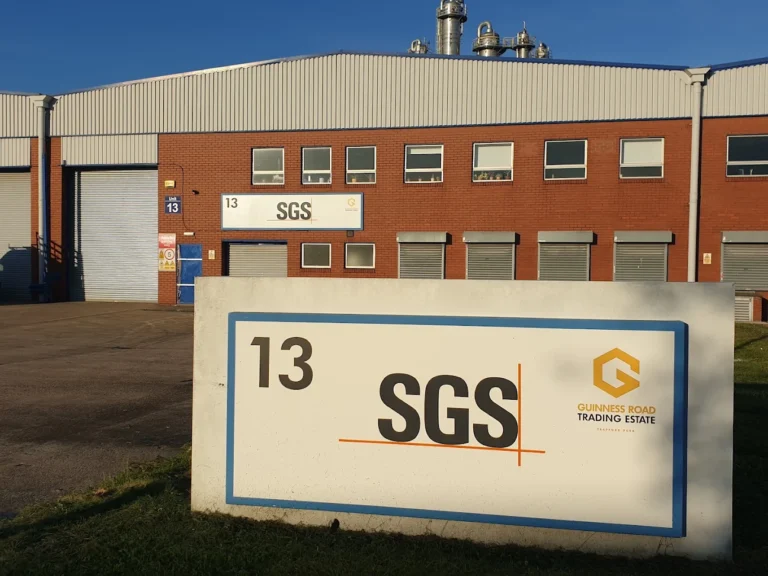
We were pleased to work with SGS at their Unit 13 site on Guinness Road, Trafford Park, on the design and installation of a new fire alarm system for their Manchester premises. Fully compliant, the setup covers the main operational areas, offices and warehouse zones, with sounders and manual call points positioned to meet the site’s fire strategy and evacuation plan. A straightforward, well planned install for a global inspection and testing name, delivered around their working schedule to keep disruption to a minimum.
Our installation Process
HOW WE GET IT DONE
Straightforward, and the same on every job. No surprises at the end of it. It’s about results, not excuses.
01
Free site survey
An engineer walks the building, looks at the layout, the escape routes and whatever your fire risk assessment says, and works out what the system actually needs to do. No charge and no obligation.
02
Design To Category
We design to BS 5839-1 at the category your risk assessment calls for, including detector types, sounder coverage, visual alarm devices where staff may not hear an alarm, and any interfaces to door holders, plant or ventilation. You get it in writing before committing.
03
written quotation
Fixed price and itemised, with the servicing schedule and any monitoring costs shown separately. No day rate surprises.
04
Installation
Worked around your operation. Out of hours, weekends or phased through a live building, and we keep you covered during the changeover if we’re replacing an existing system. Engineers are qualified, uniformed and site inducted.
05
Commissioning and Testing
Every device tested, sound levels measured, cause and effect proved, and the certification handed over that your insurer, your fire risk assessor and the fire authority will want to see.
06
Handover & Maintenance
We train your staff on weekly testing and on what the panel is telling them, set up your log book, and put you on a servicing schedule so the six monthly visits happen without you having to chase them.
FAQ
Common questions we get asked
Choosing an commercial fire alarm installation professional comes with plenty of questions. Here are the ones we get asked the most, and we are always happy to answer anything else before you commit to anything
How often does a commercial fire alarm need servicing?
At least twice a year by a competent person, under BS 5839-1. That sits alongside your own weekly test, which you carry out and record in the log book. Some premises with a higher risk or a history of false alarms are better off on quarterly visits, and we’ll say so if that applies to you.
What category of fire alarm system do I need?
our fire risk assessment should specify it. Most commercial premises come out at L2 or L3, meaning detection on escape routes plus higher risk rooms. If your assessment doesn’t state a category, that’s worth resolving before you buy anything, because the category drives the cost.
Do I legally have to have a fire alarm?
Not every premises needs an electrical system, but every premises needs a means of raising the alarm, and the Regulatory Reform (Fire Safety) Order puts that duty on your responsible person. Anything beyond a very small, single room, occupied premises will normally need a detection and alarm system. Your fire risk assessment is what determines it.
How much does a commercial fire alarm system cost?
It depends on the size of the building, the category required and whether it’s addressable or conventional. A small two zone unit is a very different job from a three storey office at L2. We quote fixed price after a survey, with installation and servicing priced separately so you can see the ongoing commitment.
Can you service a system another company installed?
A lot of our servicing work is exactly that. We’ll inspect it first and give you an honest view. If it’s a sound system we’ll take it on. If it’s obsolete and nobody can get spares for the panel any more, we’ll tell you that instead of selling you a contract on something we can’t actually repair.
Our alarm keeps going off for no reason. Can you sort it?
False alarms almost always trace back to detector type, detector siting or a fault, and on an addressable system we can see which device is responsible. It’s one of the more satisfying jobs, and it’s worth doing properly because repeat false alarms can affect whether the fire service attends.
What is the weekly fire alarm test for?
It proves the alarm can be raised and heard. You operate a different call point each week so that every one gets tested over time, check the panel responds, and record it. It takes a few minutes and it catches problems long before a six monthly service would.
Our Working Hours
opening hours
We are always happy to hear about new fire alarm & security project needs and enquiries. Call us directly, fill in the form on our contact page, or use the chat at the bottom of the screen and we will come back to you as soon as we can. Emergency callouts are available outside these hours.
Mon………………..8am to 10pm
Tue………………..8am to 10pm
Wed……………….8am to 10pm
Thu………………..8am to 10pm
Fri………………….8am to 10pm
Sat…………………8am to 10pm
Sun………………………….Closed
Areas we Serve
fire alarm installation & servicing across the North West
We’re based in Ormskirk and look after commercial fire systems across West Lancashire, Merseyside and Greater Manchester, from Ormskirk and Skelmersdale out to Liverpool, Manchester, Southport, Wigan, Warrington, Preston and St Helens. We travel further for larger contracts, so if you’re not sure whether we cover you, send the postcode over.
Fire Alarm System Related Services
Fire safety isn’t just the panel on the wall, and most of the buildings we look after need two or three of these on the same schedule.
The two go together on almost every commercial building, they’re inspected on similar cycles, and having both on one contract means one visit and one set of paperwork rather than two contractors turning up in different months.
Every locked door on an escape route has to release when the fire alarm activates. We do both, so that interface is designed in and proved at commissioning rather than being nobody’s clear responsibility.
Different job, same panel room and often the same monitoring centre. Sharing a maintenance schedule across both keeps the admin down and means one engineer can deal with everything on a single visit.
False Alarms
Reducing False Alarms
Unwanted fire signals are the biggest single problem with commercial fire systems, and they cost you more than most people realise. Staff stop taking the alarm seriously. Production stops for an hour at a time. Fire and rescue services increasingly challenge repeat callers before attending, and some will charge for persistent false alarms.
Most of it is fixable. Detector type and siting account for a large share of it, filtering and multi sensor detectors deal with a lot of the rest, and addressable systems make it far easier to work out which device keeps triggering and why. We review false alarm history at every service visit rather than treating it as somebody else’s problem, and if your existing system has a device that goes off every time the kettle boils, we’ll find it.
Free Consultation
Schedule A Free Consultation
Send us a note about the building and we’ll get an engineer out to survey it, work out what category of system your risk assessment actually needs, and put a fixed price in writing. No charge, no obligation, and it’s a genuine survey rather than a sales call.